

Curated by Team8: Emily Akullu, Kajebe Jacob Joshua, Majorine Nabulime, Solomy Nabukalu, Harrison Davis Watsala, Fiona Joan Acheng, Moses Serugo, and Martin Ssenkubuge
Under the Stewardship of: Chief Curator Philip Balimunsi
“The different stakeholders are united under one cause: to respond to the task of cleansing our collective forgotten consciousness of Art and bringing us close to ourselves again.”
Entering the newly transformed Nommo Gallery evokes an immediate collision of senses, a shared atmosphere of nostalgia, elation, amusement, and intrigue. For regular visitors accustomed to the national gallery’s previous iterations, Collective Memories: Tracing The Que-rator offers an entirely novel experience. A profound sigh of relief begins the moment the eye catches the brilliant, striking renovation of the space and is carried seamlessly through the masterfully arranged artworks on display.
Here, the theme of collective memories is intricately interrogated within the context of preserving Uganda’s social, cultural, and political heritage. The spatial politics of the exhibition are deliberate: the historic interior of the national gallery is purposefully preserved against newly installed, modern infrastructure to create a fresh, international-standard environment. This juxtaposition offers a rare opportunity to appreciate the past and the present simultaneously within a single space. Through this sophisticated presentation, the gallery transcends its role as a temporary venue and acquires a new identity as a permanent exhibition.
The objects and artworks mounted on the freshly painted walls bridge the archival and the contemporary, charting a clear trajectory from the prehistorical, through the modern, to our current setting.
- The Moving Image as Living Archive: In the foyer, a large screen features the award-nominee film War Dance (2007), capturing three children in a Northern Uganda refugee camp whose enthusiastic performance of traditional Acholi music represents enduring hope amidst a background of fear. Conversely, another room screens the classic documentary Bwana Jogoo (2019), diving into the 1970s Cranes Band love triangle involving Jessy Gitta Kasirivu, President Idi Amin Dada, and Sarah Kyolaba—a poignant, familiar look at a chaotic social lifestyle that pitted celebrities of the time directly against the gun.
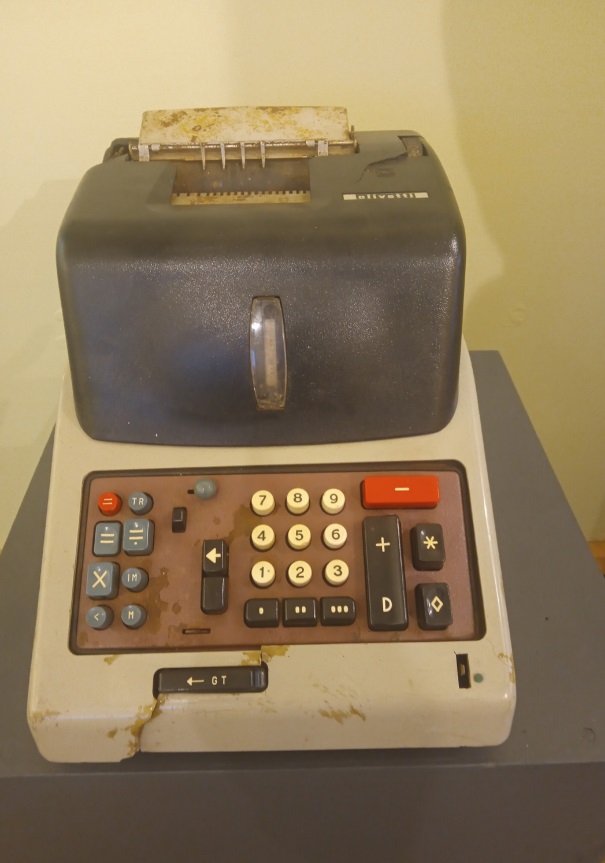
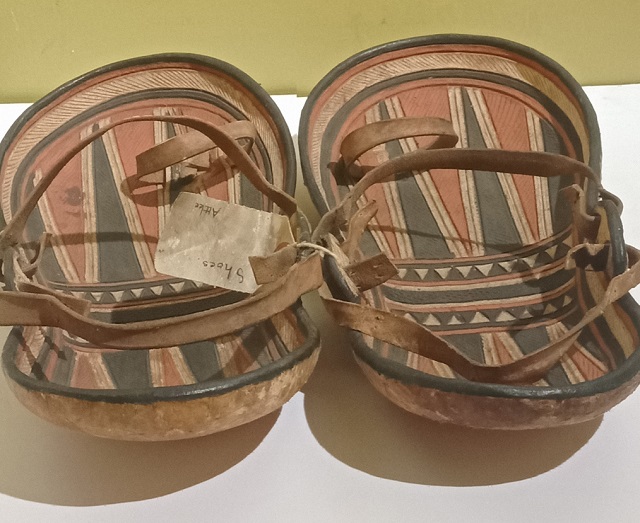
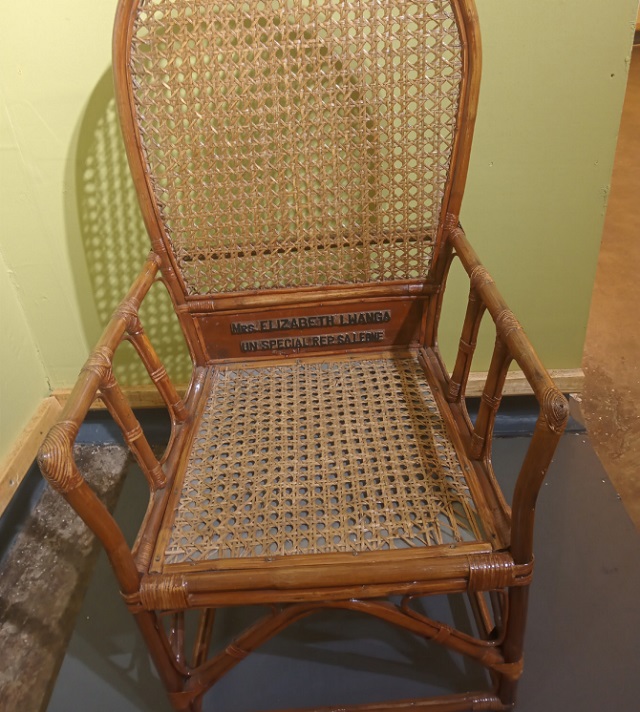
- Institutional and Tribal Remnants: The exhibition showcases physical artifacts collected from the Uganda Revenue Authority (URA) Museum and the Uganda Museum, including a URA super-automatic printing calculator, a URA Collection Bag, Samia tribal stools, Karimojong milk gourds, and Nyoro sandals. These remnants conjure the rich, diverse heritage of different Ugandan communities while illustrating a striking transition in human technology.
- The Pavilion of Heritage: Central to the showcase is a specially installed “pavilion” housing foundational visual markers. This includes the original 1962 Ugandan Coat of Arms, archival prints and posters from Nobert Kaggwa’s historical, undated first “One Man Show” at Nommo Gallery, and Jacob Odama’s profound portrait series of past Ugandan Presidents (2013).
This meticulous, thorough handiwork stands as a testament to the professional path the national gallery is pursuing under its new, dynamic stewardship. Born out of a series of virtual curatorial workshops during the second national lockdown, this exhibition emerged from conversations between Chief Curator Philip Balimunsi and eight budding curators—aptly named Team8. In paying homage to the incredible collection of Ugandan history and memories inherited at the gallery, Balimunsi’s fervent vision to raise the profile of Ugandan art to global realms is powerfully realized.
Collective Memories is ultimately a collective engagement. By fostering a meaningful, rigorous relationship between artist, artwork, curator, and audience, this exhibition bridges our historical fractures and reminds us of who we are.
Participating Artists:
Nobert Kaggwa, George Kyeyune, Lilian Nabulime, Cecil Todd, Simon Banga, and Jacob Odama.